

Miyoshi (三次市) - Monsters and Mountain Castles
Worth visiting, especially if you like yokai

Note: This post is too long for email, so please view it in the app or a browser.
I wrote an earlier post about the Gonokawa where I mentioned that Miyoshi was a good place to stay to explore the river.
Actually Miyoshi turns out to have a number of interesting things to see and do that I wasn’t fully aware of when I wrote that post because I’d mostly been to Miyoshi as a cycling start/destination or a place to stop for lunch. The first thing to note is that I’m talking primarily about stuff in or close to the urban core of Miyoshi. The second is that I’m stealborrowing heavily from the Miyoshi Tourism website, which has an excellent English language section.
Thanks to the reorganizations and mergers of municipalities over the years Miyoshi city officially sprawls over 778.14 square km and includes a lot of spectacular countryside. If you have a car there are plenty of interesting things to see outside the middle of Miyoshi too such as waterfalls, sake breweries, orchards and mountain castles. Some can also be visited using the trains - either the Geibi line (芸備線) to/from Hiroshima/Niimi and the Fukuen line (福塩線) to/from Fukuyama - or buses. The bus station by the main Miyoshi train station is the start/end of most routes (link in Japanese but your browser should translate it).
Now on to the sights and activities in the middle.
Miyoshi Mononoke Museum - 三次もののけミュージアム
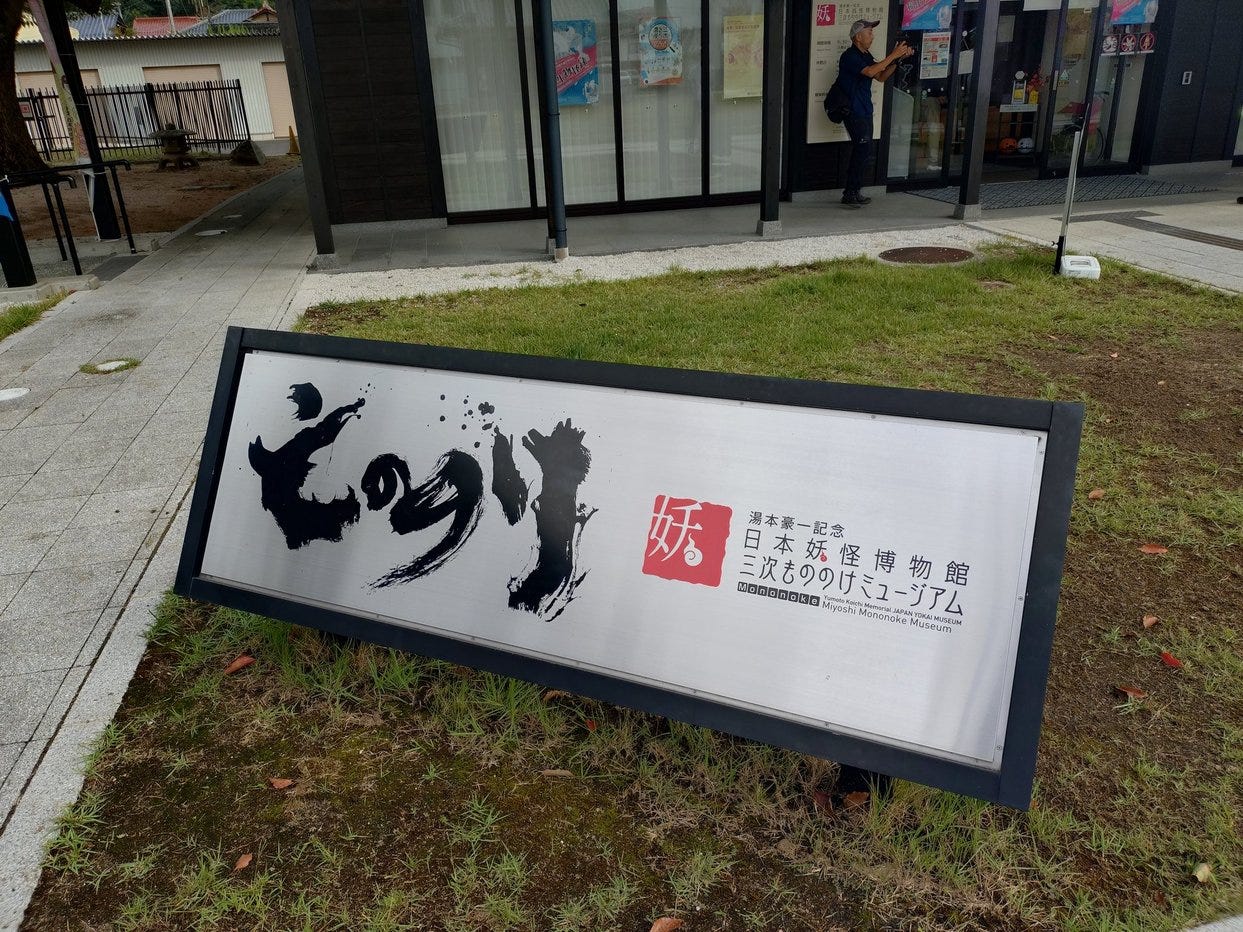
Official Miyoshi Tourism page. If you are interested the Japanese mythical creatures called yokai (妖怪) or want the background to many manga and anime as well as the Studio Ghibli film Princess Mononoke this is the place to visit. Although the official website is in Japanese only, the museum galleries have detailed descriptions in English as well.
The museum is in Miyoshi because Miyoshi is where a well known Edo-era Yokai story is set - the Ino Mononoke Roku - and mostly displays a selection of the 5000+ item yokai collection of Koichi Yumoto (湯本豪一) which he donated to Miyoshi city in 2016
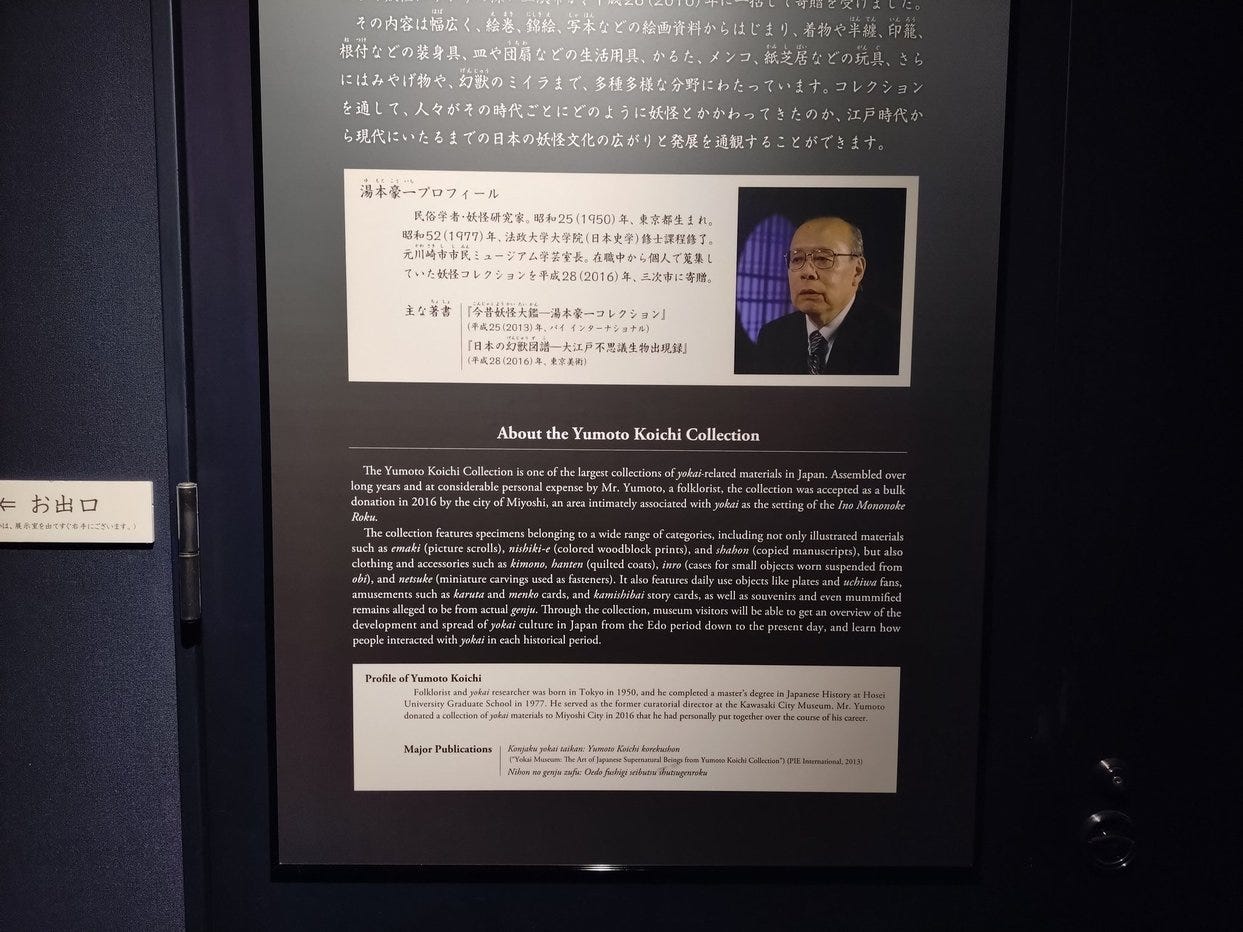
You can walk to it from Miyoshi station or take one of the numerous buses that go past. As well as the standard static exhibits there is also an interactive area where you can play with various yokai projected on tables and walls. It’s hard to explain but the interactive parts were a lot of fun even for adults. I imagine children really enjoy them.
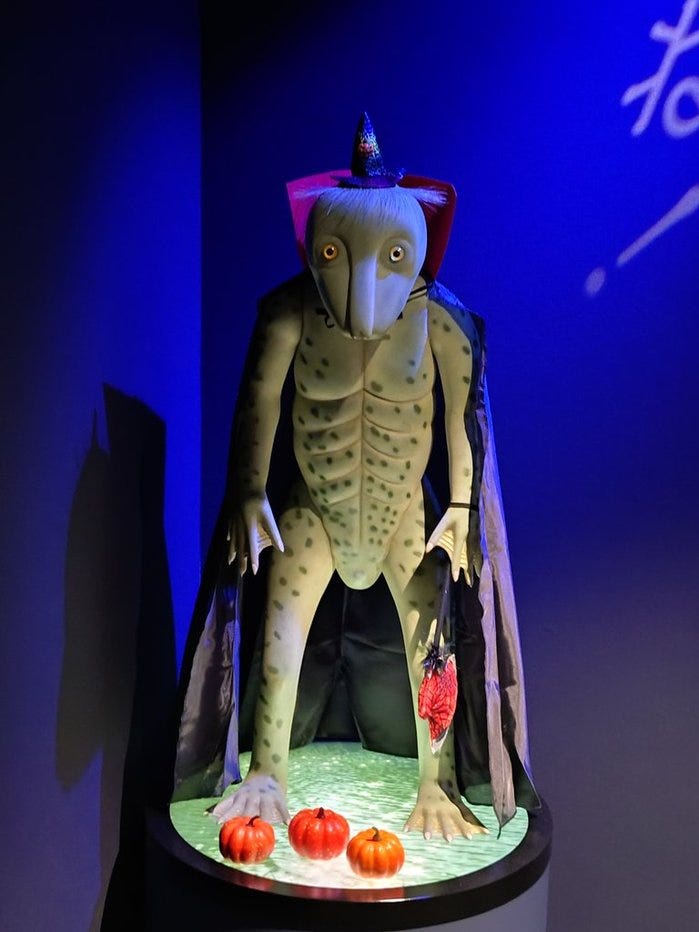
You can spend quite a lot of time at the museum and the nearby Dasai Shrine and Higumayama, which plays a part in the Ino Mononoke Roku, in fact if you spend the entire morning there or there abouts then that’s convenient because you can then get lunch at a nearby Okonomiyaki restaurant (see below).
Dasai Shrine and Mount Higumayama
A short distance away from the museum and visible from it is the Dasai Shrine which is the start of the climb up Higumayama where the Ino Mononoke Roku got started.
[The road around the back of the museum is a slightly prettier way, less trafficy of walking to the shrine, but I’m not sure it is really worth it. On the other hand it’s a pretty minor detour]
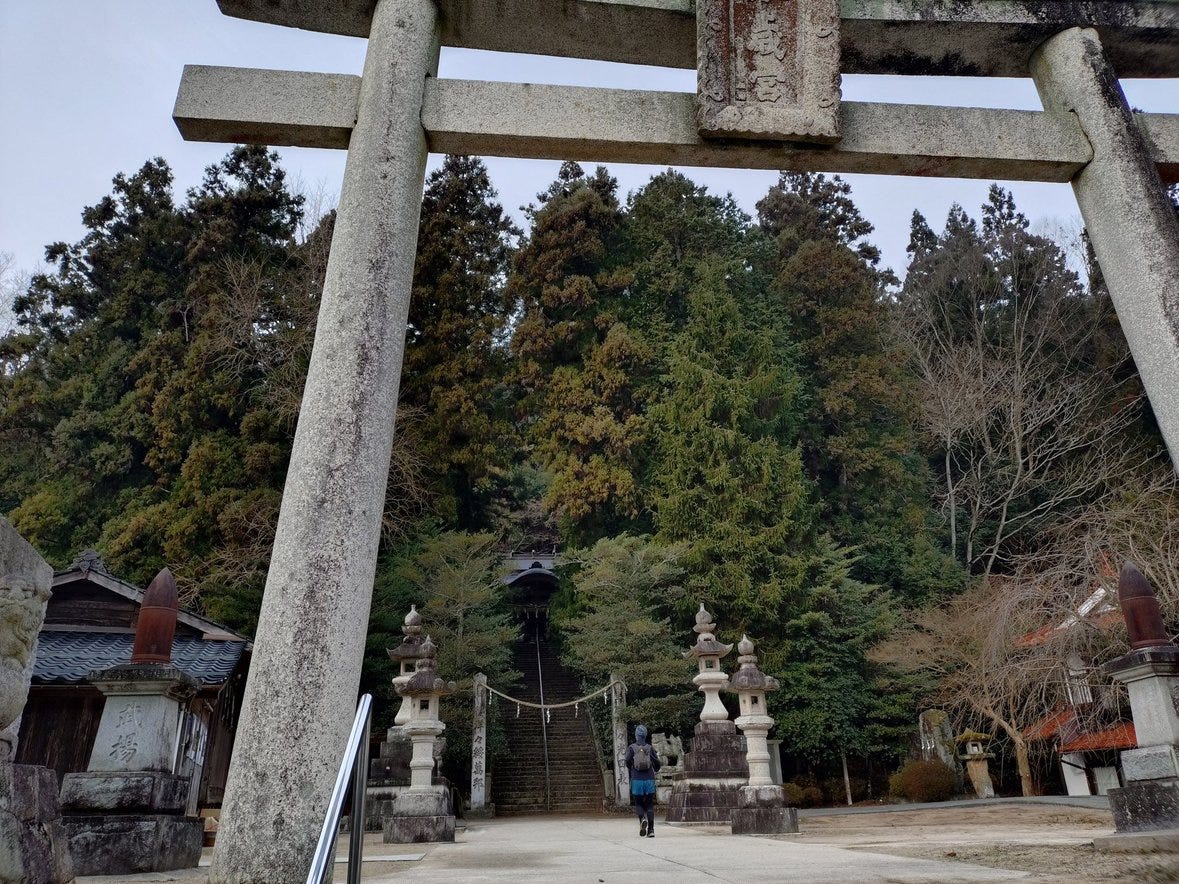
The shrine is, IMHO, just another shrine. Although thanks to its role in Ino Mononoke Roku it has also starred in various manga apparently. It’s quite nice and the steps up to the main hall are perhaps longer and steeper than some (but not as long as others). If you look at the photo you will note an artillery shell on a plinth on the left. That’s a naval shell from the Russo-Japan war, I believe. The Miyoshi tourism page also points out the yuuuge Kogoishi rock which used to be on the top of Higumayama but was moved down to the shrine in the late 19th century.
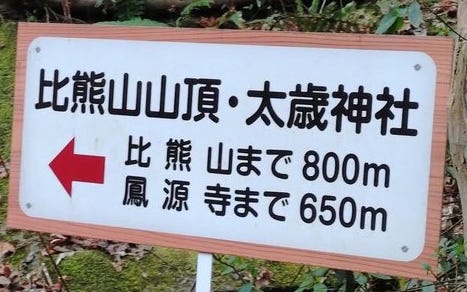
Once you have paid your respects to the shrine you should take the path to the left for Higumayama (look for 比熊山 signs). Essentially you contour around the base of the hill until you come to a gazebo and small temple then turn right and start climbing.
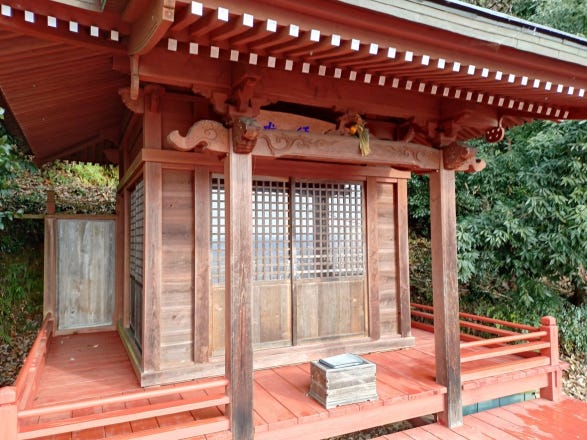
It’s a clearly marked, well trodden path up past various little jizo statues, but you do need to wear shoes that can cope with mud and the like - so not flip-flops. At one spot there’s a split.
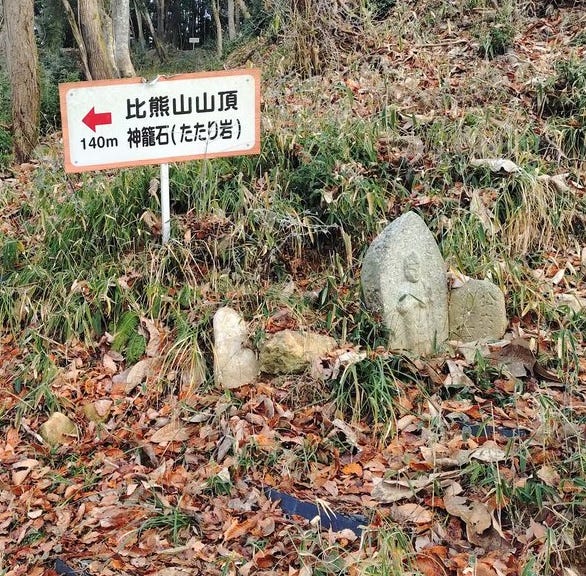
You can either follow the 比熊山山頂 sign or you can bear right and get to a viewpoint. If you don’t visit the viewpoint on the way up, you can get to it on on your way down and it is worth doing.
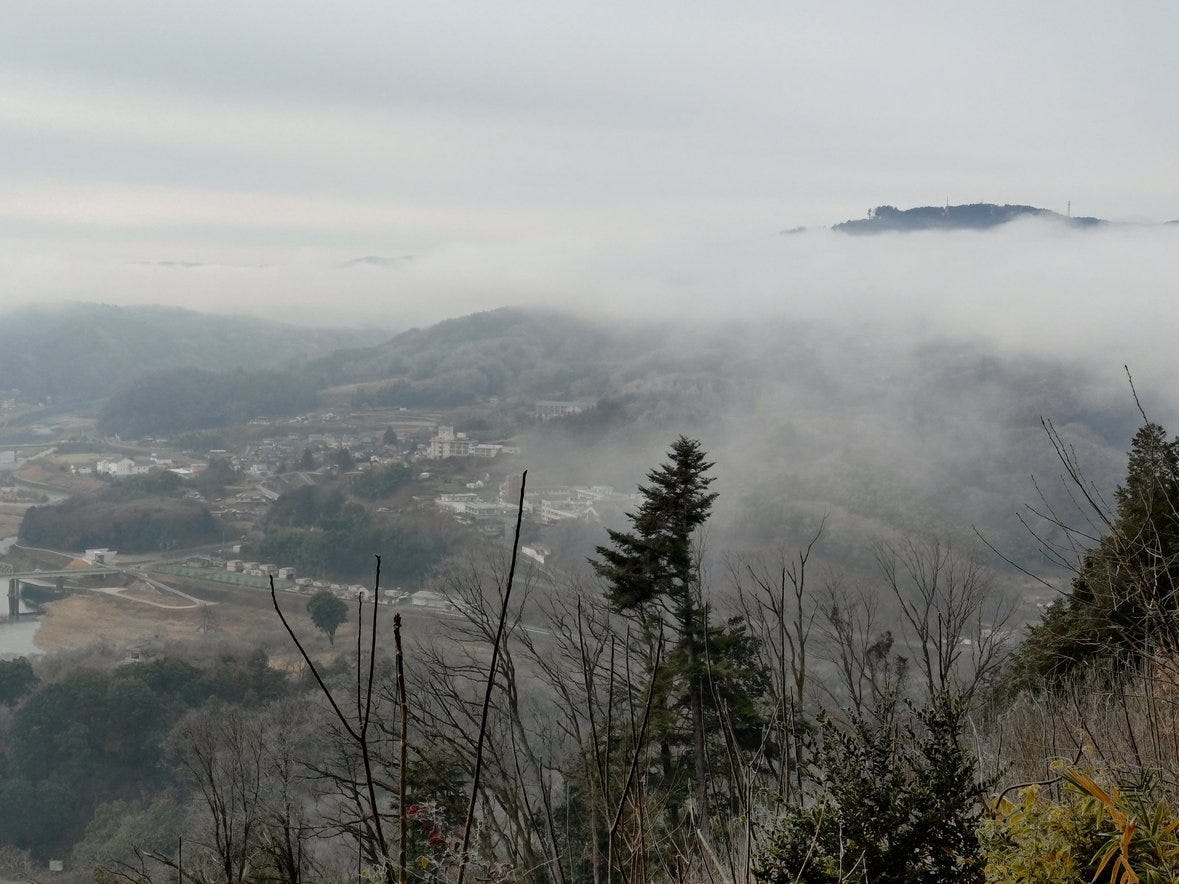
From now on there’s quite a view to the side. At the right time of year and early enough in the morning you get to see some of Miyoshi’s distinctive sea of clouds.
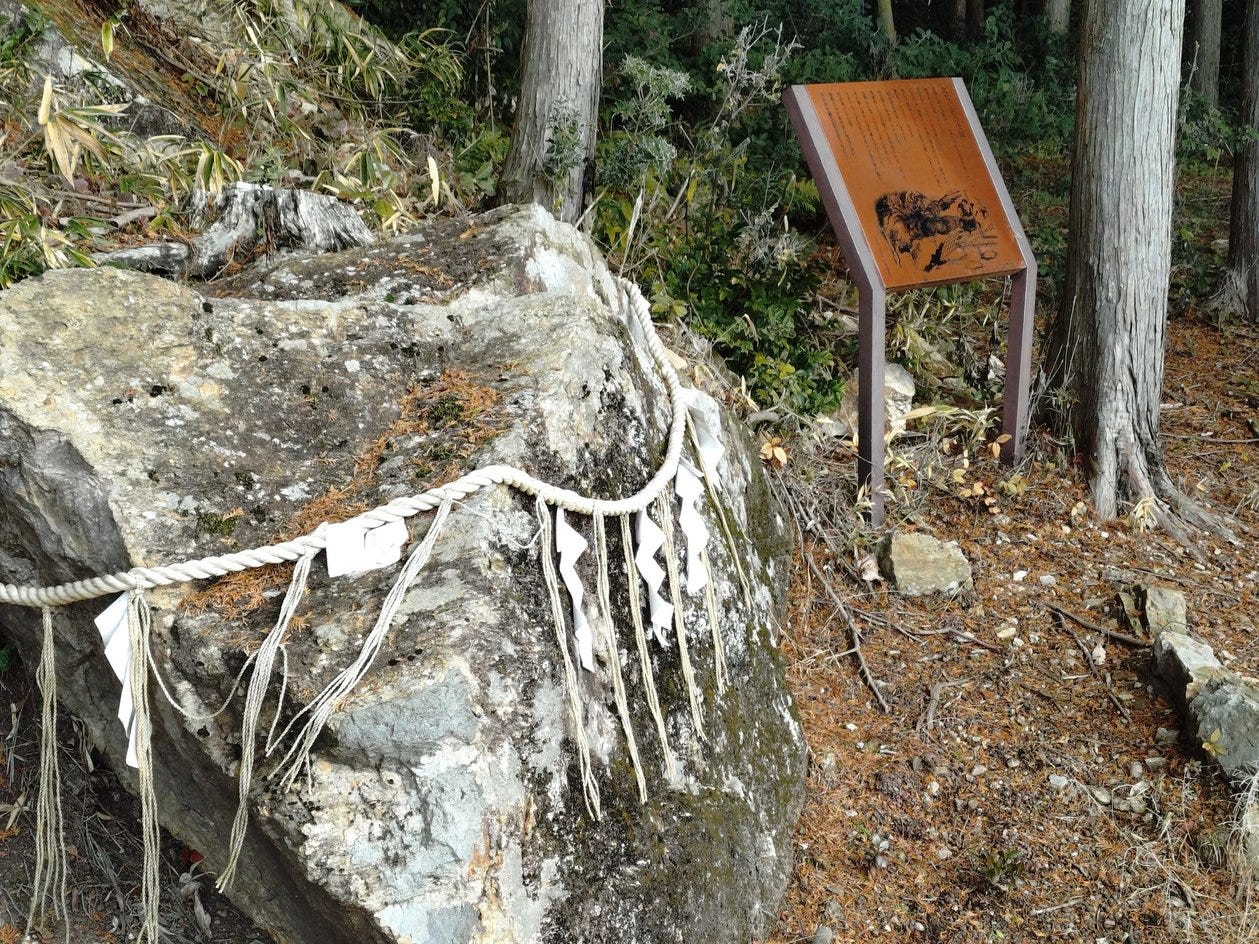
Then you get to the Tatariishi (たたり石) which is where the whole Ino Mononoke Roku got started. Since touching that rock was what caused the yokai to show up, I personally left it well alone.
The top of the mountain, just behind the Tatariishi is pretty flat because it used to be a castle1. The path continues a bit and you can wander around but there’s really nothing to see as the whole site is now a tree plantation.
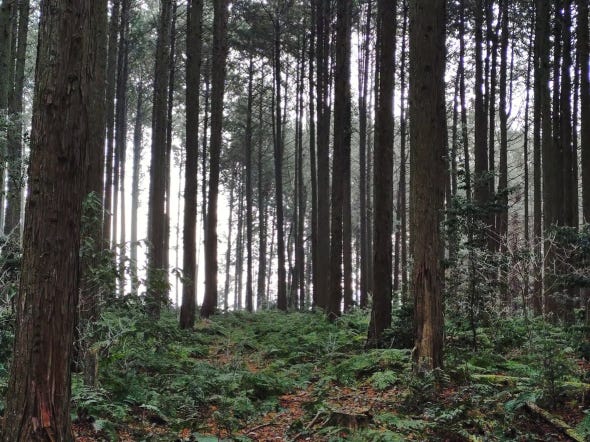
From the Tatariishi when you look down you can see the Gonokawa river to your right and just to the left of that is Ozekiyama Park. When you descend the mountaain and get to the Gazebo/Temple if you bear right you find a path that leads through more temple and drops down to the road just opposite the Ozekiyama car park. The park is also worth a wander - especially during cherry blossom season - and also used to be a castle. I think the family that used to live in the Higumayama casstle decided to move down to something more comfortable and convenient, but I may have that wrong.
Anyway it is a nice park to stroll in if you need more appetite before lunch or you decide to walk lunch off and lunch was at….
Okonomiyaki Ku-chan (九ちゃん)
This was recommended to us by a former native of the city who we’ve met in a bar in Hamada several times. It’s one just down a side street across the main road from the Mononoke Museum (google maps link) on the way to Ozekiyama Park.
Ku-chan is small and basically the conservatory/front room of a house. There’s limited parking and you may have to wait if you show up at midday. However it is well worth the wait and it probably doesn’t matter what you order - it’s all good and all remarkably good value for money.
Cormorant Fishing Ukai (鵜飼)
Every evening from June 1 to September 10 you can take a boat tour to watch while locals fish using cormorants
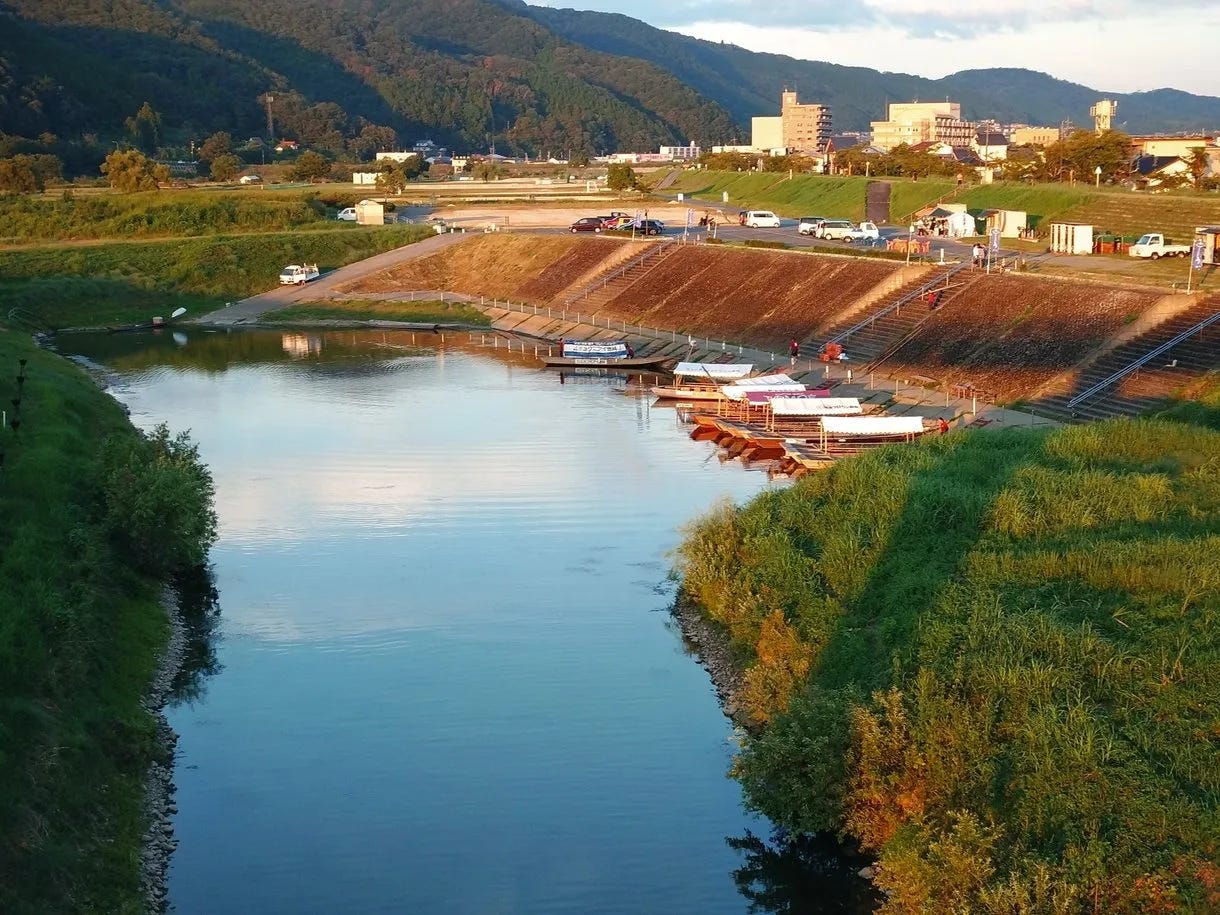
The start location (google maps) is just a short way upstream from the big red bridge you cross to get to the Mononoke Museum etc. I’ve not actually done it, because the one day we saw it last year it was too late to reserve a place, but maybe we’ll try this year. That whole area where the Saijogawa and the Basengawa join is quite a pleasant spot to walk, especially in the evening of a hot summer day. It’s also convenient for some places we like visiting for evening eats and drinks. Talking of which
Places to eat
There are a number of places that I’ve had good meals at in Miyoshi beyond Ku-chan. Only one is a chain (and it’s a local chain)… Starting off with the less Japanese ones.
The first is Restaurant Kahoku (レストラン華北 - maps), which is a classic “retro”/”Showa” European cuisine restaurant. The whole place is basically 1960s/70s Japan encapsulated in a good way.
More for lunch than evenings, though it works for then too if you can’t get a reservation and other places are full, is Bistro House Takiya (ビストロハウス タキヤ - maps). This is not a high-class gourmet establishment, but it gives you plenty of perfectly fine food at a reasonable price - an ideal choice for “I want to eat and then sleep”
The Noh Brewery (maps) is the local microbrewery. If you like craft beer then this definitely worth a visit but it also serves other drinks and the usual izakaya sorts of food. Perfect to start or end the evening in my opinion but probably not a place for the whole time.
Just opposite the station there’s the Miyoshi branch of a Shimane/Tottori izakaya chain - Kaba (かば - maps). One nice thing about this is that you can make an online reservation. Although it’s part of a chain, the place has daily (weekly?) specials that are not the same as other Kaba branches.
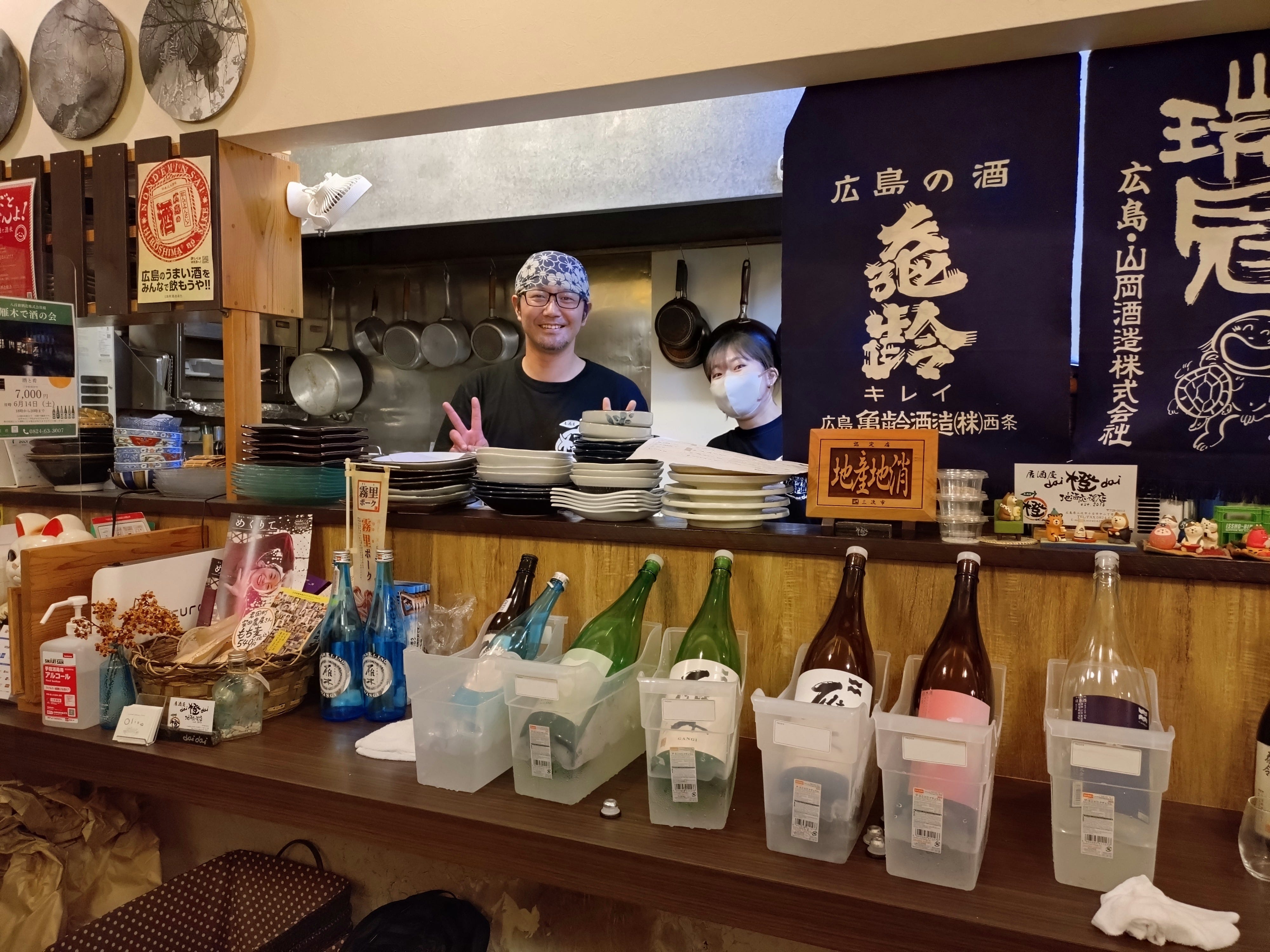
Finally, and strongly recommended, is Daidai (橙 - maps) just around the corner from the Noh Brewery. Daidai has an extensive, excellent selection of mostly local sakes, including both the Miyoshi sake makers - Zuikan and Miwazakura - as well as other sakes from Hiroshima prefecture and nearby prefectures.
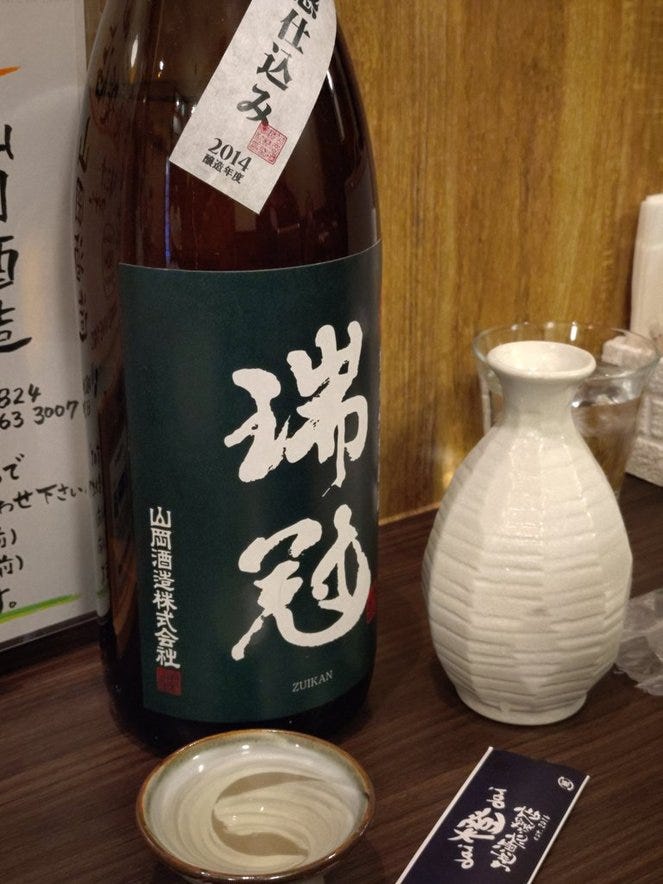
They have a good mix of food with both specials and standard menu options and can suggest what sake to pair with what food as well as whether the sake should be served cold, room temperature or heated. If sake is not your thing they also have quite a few craft shochu brands, local wines as well as the usual draft beer, highballs and so on.
There are a lot of other places to eat in Miyoshi and I’m sure most of them are great, I just have never eaten at them so I can’t give a recommendation
Places to Stay
I’ve stayed at all the major hotels - Myoshi Grand Hotel, Route Inn, Alpha One and Crown Hills. All are fine and about the same price.
The Crown Hills is furthest from the middle and generally oddest - for example there’s a men’s communal bath bit not a ladies’ one. On the other hand some days (maybe not weekends?) it offers free happy hour drinks of local sake as well as beer, chuhai or highball. If you do stay here and don’t want to walk into the middle to eat, the Sakai Yakiniku restaurant just down the street is a decent alternative.
The Route Inn is the newest and closest to the station if you are arriving by public transport, but it’s only a few steps past it to the Grand Hotel and the Alpha One is not much further in the other direction
The Alpha One is slightly closer to Daidai and the bridge across to the Mononoke Museum etc., and also often slightly more expensive for some reason
For what it’s worth we’ve stayed mostly at the Grand Hotel and the Route Inn
Miyoshi has not one, not two, but three former mountain castles on its northern hills. By far the best preserved set of remains with clearly visible earthen walls (and some stonework) is the one that is furthest from the middle - Hiebiyamajo (比叡尾山城). The best place to start the climb is Kumano Jinja, walk through the shrine, turn right and it’s quite clearly marked (yamap example circuit). If you have decent shoes and are able to get to it (there is a bus stop nearby - 熊野神社口 - with infrequent buses from the station, but a car is definitely a better option as it’s two miles from the middle) then this is a nice hike that, in addition to the looking at the ruins, gives you good views of Miyoshi as well as the option to visit a nearby temple.
My daughter and her husband hope to get back to Japan at some point -- probably a few years down the road since they just had a baby! If and when they do, I'll refer them to your Substack. I think they would really enjoy getting off the beaten track.
Another inspiring post - thank you!